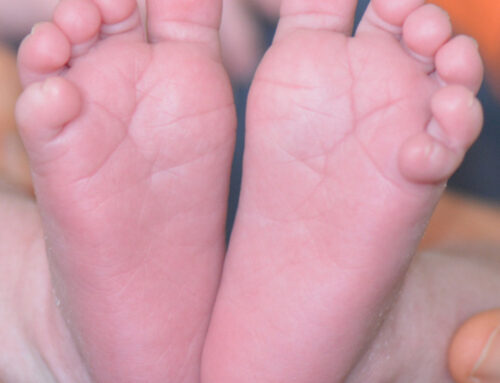


When is sweaty feet a sign of Primary Hyperhidrosis in children?
There are two different types of Hyperhidrosis (HH), Primary and Secondary, here we will discuss Primary Focal Hyperhidrosis.
Generalised sweating with an identifiable underlying cause is referred to as Secondary HH.
For further information and clarification click here.
Hyperhidrosis in children
Hyperhidrosis in children is a relatively common yet under-reported problem that can cause a significant impact on a child’s quality of life.
Although it is not temporary, it can sometimes improve with age. Approximately half a million people in the UK are affected.
There is no known cause for Primary Focal Hyperhidrosis. More than 80% of cases begin in childhood and it sometimes runs in families.
Patients with Primary HH rarely sweat when they are asleep. (Shalaby, Mohamed et al)
Diagnosing Primary Focal Hyperhidrosis
Most commonly affecting the hands, feet and underarms but can also affect the face and head or other areas including the back, neck, groin, legs and buttocks.
If your child has the following:
- Sweats from both sides of the body (bilateral and symmetrical)
- Sweats at least once a week
- Find sweating impairs their daily activities
- Does not sweat at night
- Onset before 25 years
…then they probably have primary hyperhidrosis.
The recommended criteria for the diagnosis of primary focal HH are idiopathic excessive focal sweating for a minimum of 6 months and two of the above criteria.
Treatment options
Most of the practitioners use topical therapy such as aluminium salts as first-line treatment in children because of its non-invasive nature.
Side effects of topical therapy include skin irritation, messy and time-consuming application and failure or inadequate response.
Iontophoresis (pronounced ahy-on-tuh-fuh-ree-sis) has been used for the treatment of HH since the 1930s. It is particularly effective for treating hyperhidrosis of the hands, feet, and underarms.
The process requires a dedicated machine to pass a low voltage electrical current through the skin of the hands or feet which are immersed in shallow trays of water.
Special pads, or electrodes are required for the treatment of the underarms. Tap water iontophoresis works for about 70-80% of patients.
Our recommended appointment type is ‘First Appointment & Treatment’ £36 or ‘Video Consultation’ £20
For further information and treatment options click here.
Sources:
‘Hyperhidrosis in children and review of its current evidence-based management’
Shalaby, Mohamed Sameh; El Hay, Sameh Abd
Hyperhidrosis UK