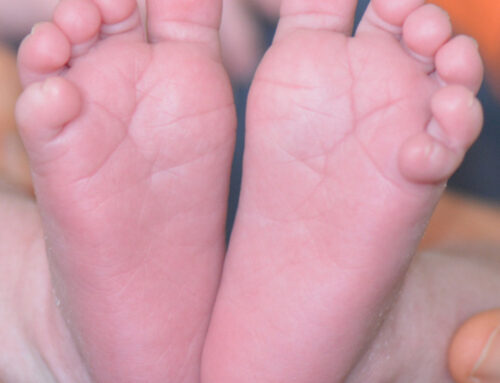


How to treat athlete’s foot in children
Athlete’s foot (Tinea Pedis) is a common skin infection of the foot caused by a fungus.
Fungal germs (fungi) often occur in small numbers where they do no harm, however, if conditions are right, they can multiply and cause infection.
Fungi thrive in warm, moist, and airless areas of skin, such as between the toes.
Where on the foot is most affected?
Usually, the area between the little toes tends to be affected (interdigital).
You may notice a rash that becomes itchy, scaly, cracked and sore on your child.
The infection may spread slowly along the toes if left untreated.
Sometimes, it spreads to the soles (moccasin or dry type) or may appear as a blister pustular rash (vesiculobullous).
Treatment
Antifungal medicines work by either killing the spores (fungicide) or preventing the fungus from growing (fungistatic).
It must be noted that most over the counter anti-fungal medication is not licenced for under 12 years old, such as Terbinafine 1% cream.
For children under 12 you may be able to apply Clotrimazole 1% cream, Miconazole 2% cream or Econazole 1% cream . (NICE 2018)
Check with your local pharmacist for clarification.
It is important to note you should avoid creams that have steroids in them, like hydrocortisone.
Although, the hydrocortisone can help with the itching, it can lead to the fungi spreading which makes the athlete’s foot worse resulting in Tinea Incognito.
It is better to apply products that only contain the antifungal ingredient and nothing else.
Management and Prevention
Good foot hygiene is essential to prevent recurrence of athlete’s foot.
If your child is affected, it is NOT NECESSARY to exclude them from school or nursery.
However, in communal changing areas, try to keep their feet covered until the rash is gone.
Also, try to prevent them from scratching the affected skin, as this may spread the infection to other sites.
NICE 2018 & NHS England make the following recommendations:
- Wear well-fitting, non-occlusive footwear that keeps the feet cool and dry
- Consider replacing old footwear which could be contaminated with fungal spores
- Maintain good foot hygiene by wearing a different pair of shoes every 2–3 days
- Wear cotton, absorbent socks
- Avoid scratching affected skin, as this may spread infection to other sites
- After washing the feet, dry thoroughly, especially between the toes
- Do not share towels, and wash them frequently, to reduce the risk of transmission
- Wear protective footwear when using communal bathing places, changing rooms, and gymnasiums, to reduce the risk of transmission
- Ideally, wear flip-flops or plastic sandals in communal changing rooms and showers. This prevents the soles of the feet encountering the ground, which may contain flakes of skin from other people
- Ideally, when at home, leave your shoes and socks off as much as possible to let the air get to your feet
Our recommended appointment type is ‘First Appointment & Treatment’ £36.00.
For further advice or information see your local podiatrist or health care professional.
Resources: