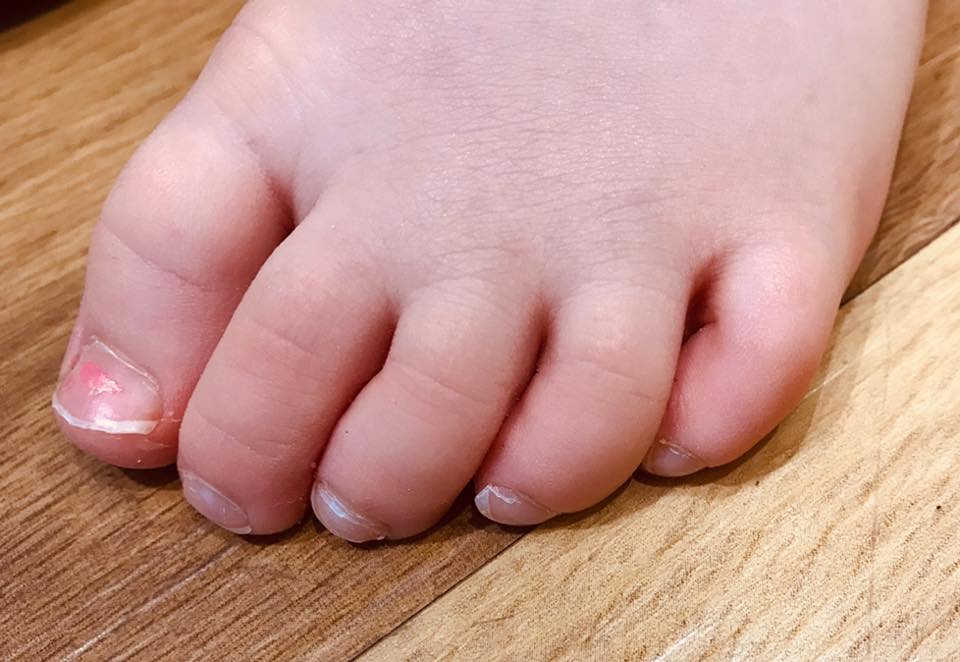


What is ‘normal’ with children’s feet?
The human foot is composed of 26 bones which work together to allow the foot to adapt to uneven walking surfaces and forces.
In a new-born, the foot is composed mainly of relatively soft and flexible cartilage which gradually converts to bone by the age of 18. During this period of development, the foot is at risk of injury and deformity.
Do you remember this nursery rhyme?
“the foot bones connected to the ankle bone,
The ankle bones connected to the leg bone,
The leg bones connected to the hip bone…”
The foot should not be considered in isolation to the rest of the body. Any abnormalities in the foot can have an affect further up the body altering posture and walking style.
Children’s development
As children begin to grow you may notice some differences with their walking, which can naturally be worrying. It is important to remember that these differences may correct themselves over time.
A child’s walking pattern does not resemble an adult until around the age of 3. Full adult gait and posture occurs at about 8 years.
‘Normal’ variations in walking can include:
- in-toeing between ages 3-8 years
- toe walking up to the age of 3 years
- ‘bow’ legs up to 18 months
- flat feet up to the age of 6 years
- ‘knock knees’ up to the age of 7
- Curly Toes – (Adductovarus Deformity of the 4th or 5th Toe)
If these variations are asymmetrical, associated with pain or limited function or occur beyond the expected time frame it is advisable to book an assessment from a podiatrist specialising in children’s feet.
Our recommended appointment type is ‘Paediatric Foot Assessment’ £60.00 or ‘Video Consultation’ £20.